Friday, May 12, 2017

#30 Where do they think snakes came from

This question comes in from Jacob.

The origin of snakes is relatively well researched and has some surprising, at least to me, members of the snake family. I think we should start by defining what makes a snake a snake and then look at the fossil record.

All snakes belong to a clade known as Ophidia which includes snakes and those extinct animals more closely related to snakes than other non-snake squamates (what most people would call lizards are non-snake squamates). Interestingly, more and more evidence is mounting to include members of the Mosasaur family within snakes as they share many characteristics with pythons, more on this later. The appearance of the Ophidia clade is suggested to lie in the early to mid Cretaceous period (145-65 million years ago). Characteristics of modern snakes, but not all snakes, includes scaled skin, limblessness (not entirely true for pythons, boas and extinct species), moderate to extreme extension of the thorax, and decrease in the number of cervical, lumbar and pelvic vertebrae.

Fossil evidence:
Tetrapodophis amplectus from http://www.sci-news.com

Snakes have a somewhat spotty fossil record. Delicate bones and the large number of ribs with a lack of more robust leg bones, or robust skulls leads to the rarity of snake fossils. However, many do exist and allow for significant, if not total, understanding of the origin of snakes. In fact, the earlier mentioned 145 million years ago is in the process of being disproven with a recent discovery in Alberta that may be as old as 167 million years. The skulls of these new species place them firmly in the snake classification. Another fossil, which is younger, Tetrapodophis amplectus, is a four legged animal that has all the body features of a snake in addition to having four limbs. The overlap between limbless fossils and those with two or four legs that all bear the derived anatomy of snakes makes a very tangled picture. However, it is not uncommon to have this kind of variability in the evolutionary process. Though two theories have been hotly debated, burrowing vs marine swimming, the burrowing theory is finding support from CT scans. These suggest snakes lost their limbs to burrow.

Mosasaur from the Oceans of Kansas collection: http://oceansofkansas.com/mus-mosa.html

When snakes have legs...:
Not all snakes, fossil or modern, are limbless. Modern members of the python and boa family have a structure called pelvic spurs. These spurs are remnants of their leg bones, referred to as vestigial structures. I discussed snake legs in a previous post about limbs. Cornell University has a short video about snake toes. Then we have the ancient marine reptiles of the Mosasaur family. Research is building to show that they at least share a more recent common ancestor with snakes than other reptiles while other research suggests that they might in fact be snakes.

So where does that leave us...
Research suggests that snakes evolved from burrowing lizards. Based in the fossil record there seem to be multiple species with legs that possess many of the derived characters that make a snake a snake. This information gives weight to the idea that snakes are evolved from a much earlier lizard which would have had four limbs. These limbs were later lost, mostly, but retained in full, perhaps, by the mosasours and partially until the modern time in the pythons and boids. In reality, scientist are still combing the fossil record and DNA, in the form of comparative genomes, to produce a complete family tree for snakes and their ancestors. Even venom origins are helping paint a better picture of snake evolution.

Wednesday, November 4, 2015

Species Spotlight: Desertas Wolf Spider


Name: Desertas Wolf Spider
Scientific Name: Hogna ingens
Conservation status: Critically Endangered
Location: Desertas Islands Portugal
Habitat: Mixed grasslands with exposed rocks and soils
Diet: Predator; invertebrates and lizards

Additional information: The Desertas Wolf Spider is the world's larges wolf spider with a leg span of 3-5 inches. With no mammals on the island this spider is the top predator in its environment. Decline of this spider is caused directly by invasive grasses which root in the crevasses needed for the spider, and other wildlife native to the island, to make homes. Current conservation efforts are underway to move populations of the island's wildlife to areas without the invasive grasses and to remove the invasive grass as well.

Resources:
IUCN Red List
EOL
Animal Arkive

Friday, October 30, 2015

Species Spotlight: Lemur Leaf Frog

Name: Lemur Leaf Frog
Scientific Name: Hylomantis lemur
Conservation status: Critically Endangered (Extirpated from many sites particularly in Costa Rica)
Location: Central America (Panama, Columbia and Costa Rica)
Habitat: Undisturbed Humid Forest
Diet: Unknown though small invertebrates are most likely diet.

Additional information: The Lemur Leaf Frog changes color depending on activity level and time of day. This frog is one of few species that can bask in sunlight for long periods of time without drying out. Pterorhodin pigment in the skin allows it to reflect heat and may add to disease resistance. The resistance of this tiny frog to Chytridiomycosis, a fungal disease that is decimating many amphibian populations, is of great interest to scientists who are involved in amphibian conservation efforts around the world.

Resources:
IUCN Red List
EOL
Animal Arkive

Monday, October 26, 2015

Species Spotlight: Angel Shark


Name: Angelshark, Monkfish, Atlantic Angelshark
Scientific Name: Squatina squatina
Conservation status: Critically Endangered, extirpated from large areas of former range
Location: North Atlantic Ocean, Mediterranean Sea, Black Sea (Formerly North Sea)
Habitat: Coastal waters and outer continental shelf waters with sandy or muddy bottoms
Diet: Carnivore: fish, skates, molluscs, and crustaceans

Additional information: Angelsharks are bottom feeding, nocturnal sharks which spend daylight hours buried in muddy or sandy bottoms with just their eyes exposed. Though not a fish consumed by humans, the biggest threat to the Angelshark is fishing. Their decline is caused because these sharks become by-catch, unused fish caught and often killed, of trawling.

Resources:
IUCN Red List Entry
EOL Entry
Animal Arkive Entry

Monday, October 19, 2015

Species Spotlight: Short-eared Dog


Name: Short-Eared Dog (Short-eared Zorro)
Scientific Name: Atelocynus microtis
Conservation status: Threatened/Endangered
Location: Peruvian Amazon Rainforest
Habitat: Undisturbed Rainforest
Diet: Generalist; fruits, fish, mammals, insects, frogs, crabs, and reptiles

Additional information: The Short-Eared Dog has thick dense fur to stay dry while swimming and in the intense rains within the forest. The dog also has partial interdigit membranes (partial webbing) probably owing to its time spent swimming and fishing. Due to being extremely reclusive the exact numbers in the wild are unknown but it is suspected that there are less than 15,000 left in the wild.

Resources:
IUCN Red List Entry
Animal Arkive Entry
Encyclopedia of Life Entry

Saturday, October 10, 2015

Species Spotlight: Sea Pigs


Name: Sea Pig
Scientific Name: Scotoplanes sp.
Conservation status: Unknown but threatened by deep sea trawling
Location: Atlantic, Pacific and Indian Oceans
Habitat: Deep sea >1000m
Diet: detritus and scavenged corpses

Additional information: Sea pigs have a very sensitive sense of smell that they use to locate food. The appendages, including those coming from the animal's back, are legs. Sea pigs are echinoderms, related to starfish and sea urchins, and are a type of sea cucumber. These animals have been cited as a possible source for figuring out the life style of the fossil Hallucigenia from the Burgess Shale deposits.

Resources:
Encyclopedia of Life Entry
Facts from WIRED Magazine
From Echinoblog

Wednesday, September 30, 2015

Species Spotlight: Fossa


Name: Fossa
Scientific Name: Cryptoprocta ferox
Conservation status: Endangered
Location: Madagascar
Habitat: Dense forests and woodlands
Diet: Carnivore; lemurs, rodents, frogs, lizards and birds.

Additional information: Despite its feline appearance, including retractable claws, the Fossa is the largest member of the mongoose family that can grow to over 2 feet long and close to 30 lbs. The Fossa specializes in hunting lemurs. Due to its forest habitat requirements this species has seen a population drop of 30% over the past 20 years as Madagascar rainforest is cleared for agriculture and by logging. It is also often targeted by locals for eradication because it will prey on domestic fowl.

Resources

Wednesday, September 23, 2015

Species Spotlight: Pink Fairy Armadillo


Name: Pink Fairy Armadillo
Scientific Name: Chlamyphorus truncatus
Conservation status: Unknown/Data deficient
Location: Argentina
Habitat: Desert, and dry, sandy grasslands
Diet: Worms, insects, snails and grasses

Additional information: The smallest of the armadillo species, measuring 3-4 inches long on average. Nicknamed the "sand swimmer" for its extraordinary speed and efficiency when it comes to burrowing. Listed as Data Deficient; little is known about its population status, ecology or requirements. Due to its capture for black market pet trade and the fact that it has a poor survival rate in captivity it is a priority species for future assessment studies.

Resources:
IUCN Red List Entry
Animal Arkive Entry

Sunday, September 20, 2015

Species Spotlight: Maui hesperomannia


Common Name: Maui hesperomannia
Scientific Name: Hesperomannia arbuscula
Status: Critically Endangered
Type of plant: Shrubby tree
Habitat: Lowland rainforests
Range: Maui and Oahu

Additional information: This distant relative of the Magnolia resembles a more familiar plant, rhododendrons, in growth and shape. Only 25 individuals are thought to remain of this beautiful plant. The biggest threats come from feral pigs, introduced rats, invasive plant species, trampling by humans and human collection of specimens. Several botanical gardens are propagating this plant to help with species survival.
Animal Arkive
EOL
IUCN Red List

Wednesday, September 16, 2015

New Resources - Let's learn MATHS!!

I will still be answering questions as I receive them, however, I have been asked to add something additional. As we move forward I will be adding resources for science learning in the online environment. These will not, for the most part be sites for taking classes but rather sites for learning aids or for fun science learning.

The first request was for mathematics resources, so here are some of my favorites...

Math Warehouse
This is an interactive site for students, teachers and just about anyone who needs to brush up on math concepts. The site is easy to navigate by math type or searching.

Math is Fun
Another site that covers a wide range of math topics from geometry and algebra. Each topic has a ton of images, great definitions and activities to reinforce the information. The site is easy to understand and breaks all the topics down to easy to understand and manage topics.

Math.com 
This is a self tutoring site for Kindergarten to Calculus and some other advanced topics in math. The site includes things like study tips and test prep guides as well as practice problems. It is a great all around source for learning new or brushing up on older math knowledge.

Cool Math Games
Learn basic math concepts with some fun flash games.

Numberphile
A great youtube channel that tackles complicated and interesting math topics through series of weekly videos. Also the Numberphile 2 Channel which covers many of the topics more in-depth than the main channel.

TecMath
A youtube channel that shows tricks and tips for doing math and remembering mathematical information.

Mathantics
Youtube channel to review or learn various math principles.

3Blue1Brown
Ever wanted to learn math as entertainment? Then this is the youtube channel for you. Sadly it has been almost a month since they uploaded their last video.

Mathologer
A really fun math channel that explore theories and properties with visual demonstrations.

ViHart
A really fun channel that explores math concepts with humor and a free form style that one might imagine a journal being written in. Bonus for the riotously funny sketches and images that go with it. (And it covers some other topics too.)

Saturday, February 28, 2015

#29 Is it a coincidence that a female's menstrual cycle is equivalent to the moon's orbital period? Are they connected?

This question comes from Tom S. via the blog.

There are a couple things in this question I want to address. First, if it is a coincidence it is not connected. In science there is a concept of "coincidence or correlation does not imply causation or connection". There is a great humor blog called Spurious Correlations that shows that you can make anything correlate.

That aside, the second and more important concept to address is that this assumes all women have the same menstrual cycle. This is an assumption that is often made but not reality. What it comes down to is that this concept is comparing two estimates as if they are real, measured and accurate numbers. I think this is what we will address, as well as the moon cycle itself.

How long does it take the moon to orbit the Earth?

This in itself is a complicated question because the moon phase appearance is influenced by the moon orbiting the Earth and the Earth orbiting the Sun. The moon orbits the Earth in just over 27 days. However, it is 29 and a half days for the moon to pass through all the phases. (Discussion of Lunar cycles) Which of these would we consider the moon cycle? The 28 days we usually hear is an average of these two time lengths. (We will see in this discussion that a lot of common knowledge on the subject is based in comparing multiple averages and not real numbers.) In truth, every common calender lists the moon cycle as 29.5 days and not the 28 that we associate with the menstrual cycle. You can read about all the calender relations and much more on lunar cycles here.

The female cycle

There is a huge misnomer in common knowledge that a female cycle is fixed at a certain number of days. This is not true. The length of a female cycle changes for many reasons and may change over a woman's life time. To this discussion I think it is important to look at some of the many things that can change the length of a woman's menstrual cycle. Most women fall in a 21 to 35 day cycle while it is not uncommon for women to exceed the 35 days as well. This time period is for the average woman without the influence of medications, such as birth control, or other influences from the list we will be discussing below. Of those 21-35+ days, 2-7 days is spent bleeding. This is the numbers for adults. However, for teens and pre-teens the range is even greater and may be 21-45 days or longer between periods.

Circadian Rhythm and Sleep

Our natural internal rhythms can alter the frequency and duration of a menstrual cycle. Sleeping excessively or not enough can have an impact on menstrual cycle length. Chronic insomnia can affect the length of a menstrual cycle causing a woman's normal cycle to be longer than the 35 days at the upper end of the average. Melatonin levels can change the length of a cycle too. This is important because of the use of over-the-counter melatonin for sleep which makes this influence more common than in the past. There is plenty of research that shows sleep rhythms can have such an effect on the cycle that it can impact fertility.
A research paper about circadian rhythms and menstraul cycle


Eating and Weight

The amount one eats can impact length of menstrual cycle. Decrease in food due to starvation, be it external such as famine or internal such as anorexia or bulimia, can  decrease the frequency of menstrual cycles. In some cases lack of food can eliminate the menstrual cycle completely. On the other side, over eating and being obese can decrease frequency of menstrual cycles. Types and quality of food can also affect menstrual cycle duration. Other things such as alcohol and caffeine consumption can alter period length.
Research paper weight and sex-hormones
Research on anovulation
Bariatric surgery and menstrual/fertility issues

Exercise

Intense exercise can alter fertility and menstrual cycles as well. Called exercised induced Amenorrhea, this is a complete lack of menstrual cycle but it can also be a decrease in frequency.

Medications and Illness

A large number of illnesses can affect period duration. Everything from anemia to uterine cancer can alter menstrual cycles. Medications can also affect the duration and intensity of menstrual cycles. Many mood stabilizing medications such as anti-depressants can increase or decrease the length of menstrual cycles.
Diseases and conditions that are effected by or affect menstrual cycles.

Age

Young and old women both experience irregular menstrual cycle lengths. Between the ages of 25 and 40 women experience the most regularity in periods. Prior to the age of 25 menstrual cycle irregularity is related to the hormone imbalances related to sexual maturity and development. After 40 the irregularity is due to peri-menopause.

Stress Levels

High stress levels can trigger less frequent or erratic menstrual cycles. At the root of this is the body mechanism, the same one in play with starvation, that signals that this is a poor time to conceive a child.This body stimulus can reduce the amount of menstrual cycles, which reduces the number of ovulations or chances to become pregnant.
Stress and Menstration
Affects of stress on women's health
Research paper on job stress and menstrual length


Other considerations.

The often cited study by Winnifred B. Cutler in 1980 that is used as proof that women's cycles are related to the moon doesn't prove anything. In the study it was shown that 40% of the studied women had a period start within 2 weeks of the full moon, i.e. within half a month of the full moon. The two week time frame is very large considering this is half of the entire moon cycle. The other thing to consider is most of the women, 60%, showed no relationship at all with time of period and full moon.


More reading:

Exercise and weight and menstrual cycles
Missed periods, exercise and osteoporosis
Stress, ovulation and bone health
List of everyday things that can affect periods.
Causes of Amenorrhea
The moon and activities
Moon cycle length and estrus length in multiple animals.
Do women who live together actually synchronize?

Thursday, February 19, 2015

#28 Book Review: Undeniable: Evolution and the Science of Creation

Undeniable: Evolution and the Science of Creation
By Bill Nye
What is this book about?
This book, despite the title, is actually focused on the basic research, discoveries and theories that support evolution. It discusses the benefits that have come from the study of evolution and the history of the concept.

What I love about this book...

It is written in a very relaxed and informative. It is very easy to read and is written very much like the Bill Nye the Science Guy TV show. The book covers some very in-depth and complex science concepts in a way that anyone can enjoy and understand. It has a lot of humor as well as seriousness. Even as someone who knows the science background there was enough history and related information to keep it interesting.

What could have been better?
This is a book that I read in print and kind of wish I would have listened to the audiobook. I feel like Bill Nye's exuberance that comes through in his voice would have made the book even more enjoyable. I do feel like the title might keep people from reading this book. There isn't much in this book about creationism at all which some people might think given the title.

Tuesday, February 17, 2015

Question #27 What is the importance of herd immunity?

From Linda on Facebook.

Before we talk about the importance of herd immunity we should define it. Herd immunity is sometimes called community immunity. I think herd immunity is most easily defined through an example.

Let's imagine two communities of 100 individuals. 

Community A Most of the individuals have had vaccinations (90) and there are 10 people who are either too young or too immune compromised to be vaccinated. So in this community 90% of people have vaccinations and 10% cannot receive them.

Community B Few individuals have had vaccinations (10) and there are also 10 people in this community that are either too young or too immune compromised to receive vaccinations. In this community 10% have vaccinations, 10% are unable to get vaccinations and 80% are unvaccinated, meaning they have no immunity.

Now, let's imagine the virus that the vaccination is for comes into contact with these two communities. 

In community A, 90% of people who come into contact with the virus are not effected by it because their immune system has antibodies. These 90% of individuals also do not become carriers, meaning once they come in contact with the virus they do not carry the virus off to infect other people. This means that 9 out of 10 times the virus tries to invade this community it is ineffective because of the immunity. Most of the herd/community is immune to the virus so those who don't have the immunity are unlikely to contract it.

In community B, 10% of the people who come in contact with the virus have immunity and do not become sick or carriers. However, 80%, or 8 out of 10, of individuals do come down with the sickness and carry the virus into the community to infect others. That means the 10% unable to be vaccinated have an 80% chance of catching this virus. Those most susceptible to the virus are highly likely to come in contact with a community member who is carrying the virus.

This is the basis of herd immunity, the more of the herd that is immune the more safeguard there is for those who are unable to receive vaccinations or may be in serious danger from becoming sick, such as the young, those with immunodeficiency diseases, or undergoing chemotherapy. Herd immunity works on small scales; a single family with a new baby or a sick elder; or a community as large as an entire city, state, country or the broader world. Herd immunity is important to stop the spread of a disease from one individual to another and is a major force in preventing epidemics and pandemics.


What percentage (R0) of the population must be vaccinated to provide herd immunity?

This is a very tricky question and involves several variables. One major variable is how contagious the virus or bacteria, or how fast it spreads. The more contagious the disease the higher the percentage of people needed to provide herd immunity. The interaction and travel patterns of the community matters to this as well. With modern travel, such as cars and airplanes, someone carrying a virus can travel much farther in a single day. This means that the herd immunity of the home population and the destination population are both equally important when it comes to a carrier. In general, the higher the percentage who are vaccinated, the better the herd immunity.(Check out the link in the more information section for an article about how this is calculated)

Why are vaccinations important to herd immunity?

Vaccinations provide a few important things. First, immunizations create a record of who has immunity. This information is important during an outbreak and also allows officials to track down patient Zero. (Patient Zero is a term for the person who initially brings a disease into a community. Knowing patient zero can allow officials to track who they have been in contact and who might have contracted the illness.) Secondly, vaccinations allow the individual and the medical professionals to know that an individual, or group of individuals, is immune to a specific strain of a disease. Perhaps the most important aspect of herd immunity through vaccinations is that it allows a large portion of the population to become immune without having to contract the disease. This is a particularly important benefit when the disease is debilitating or has a high rate of death, such as polio. A final importance, at least to those who have and love pets, is that some diseases are zoonotic, meaning they can be transmitted between people and animals. Having a pet and/or person vaccinated against a zoonotic disease protects the human population, the pet population, and in some cases populations of food animals.A great example of a pet vaccination that provides safety to both the pet and the humans who love them is the rabies vaccination.

More information:
Research paper on the benefits of herd immunity in Meningitis
 PBS page that discusses how to calculate percentages required for herd immunity to be effective as well as other related topics.
CDC discussion of herd immunity
Series of interactive animations to show visually the impact of herd immunity vs no herd immunity

Free Courses online that cover immunity and health
An Introduction to Global Health
An Introduction to Population Health
Epidemiology: The Basic Science of Public Health
Epidemics, Pandemics, and Outbreaks

Sunday, February 15, 2015

Question #26 Who is longest fish in the whole Universe?

Submitted by nasimul via email

There are two ways of looking at this question. First what is the longest fish that has ever lived and the second being what is the longest extant, i.e. currently living, fish. I will answer both of these questions. The interesting thing about most of these giant fish is that they feed on the smallest of ocean dwellers, plankton.

Longest Extant Bony Fish. - Regalecus glesne

The longest extant bony fish is my favorite fish, the Oarfish. The oarfish is a deep sea fish that lives at the depths of 600 feet (200m) in the Atlantic Ocean and Mediterranean Sea.(Though there have been seen in the Pacific Ocean) These fish are so long and strange looking that they are the sources of quite a few of the world's sea serpent myths. These long, slender, and serpentine fish can grow to 50 feet long (15 m) ad weigh over 600 lbs (272 kg).


Largest Extant Cartilaginous Fish  - Rhincodon typus

Not to be alone, currently the record of largest extant fish bounces back and forth between the Oarfish and the Whale Shark. As larger and larger specimens of both of these species are recorded it seems that they may have a tie for the largest fish in the sea.  The largest whale shark to date has been 41.5 feet long and 2.35 tons. These giants live in tropical waters where they filter feed on plankton.


Largest fish to ever live - Leedsichthys

This extinct fish may have grown larger than the oarfish. Their length was at least 54 feet and may have grown to be even larger. The largest specimen to date has been 72 feet. These bony fish ate plankton that they filtered from the water much like modern day baleen whales, such as the humpback and right whale.  Leedsichthys lived about 150 million years ago, in the early Jurassic Period when dinosaurs were just showing up on the planet.

 From Chased by Sea Monsters:


More information:
More about the Oarfish
Giants of the Sea

Tuesday, June 3, 2014

#25 What is lactose intolerence?


I think we should start with defining some things first. Lactose is a type if sugar found in dairy products. Lactose intolerance is a word that is often misapplied to a wide variety of conditions from dairy allergies, milk fat intolerance and the actual intolerance of the lactose sugar. Commonly people will apply the term lactose intolerance to anyone who has difficulty with milk products.  All of these conditions have varied intensity depending on the body.

Does dairy cause lactose intolerance?

No. Dairy does not cause lactose intolerence.  Any of the above definitions of lactose intolerence have a biological and often genetic deficiency in the body that interacts with the presence of milk. The condition itself is not caused by milk.


What is lactose intolerance?

Someone who has lactose intolerance either doesn't produce enough lactase or produces no lactase at all. Lactase is an enzyme that breaks down lactose. Someone who doesn't produce enough may just feel a little nausea when dairy is consumed. Someone who produces no lactase may have severe symptoms such as vomiting,  fever and diarrhea.  Several over-the-counter medications exist to help individuals consume dairy without issues.

What is an intolerance to milk fat?

There isn't much research on milk fat intolerance but the research available suggests that approximately 5-9% of those who believe they have lactose intolerance may have both lactose and milk fat intolerance or just a milk fat intolerance. Since research is very limited it is hard to say much more about this condition.

What is milk allergy?

An allergy means your immune system has labeled an otherwise harmless substance as something that is dangerous to the body. In the case of dairy allergies it is usually one of the proteins that trigger the allergy. When a non - allergic person consumes dairy the body simply digests it.  When an allergic person eats dairy they digest it but one or more compounds in the dairy triggers an immune response. This immune response can be mild, sometimes termed milk or dairy sensitivity.  In some the immune response can be so intense that it can cause severe illness or even death.

Milk allergies are also most common in children. Most often the milk allergy develops before one year of age and most children grow out of the allergy by 4 or 5. Findings have shown that some infants produce large quantities of antibodies that are related to one or more types of milk...cow and breast milk allergies are the most common.

Sometimes the allergy persists into adulthood and allergy tests are required to determine which components of the dairy (sugars, proteins or fats) are causing the reactions do that diet can be more appropriately managed.

Common allergic symptoms include swelling of the lips, tongue or face or rashes, hives or skin irritation when one comes in contact with the allergen. In some cases anaphylaxis occurs or other life threatening symptoms such as airway constriction from the swelling.


Casein reactions and intolerance.
Casein is a large group of phospoprotein found in all mammalian milk. These proteins make up about 80% of cows milk and 45% of breast milk. Casein is present in many foods including dairy,  breads, pancakes, margarine,  non - dairy creamers and many other foods. Casein is present in higher quantities in dairy which means there will be a greater reaction to dairy products. This can often lead individuals to believe they have lactose intolerance. Casein allergy and intolerance is very uncommon some studies suggest 1% or less of the individuals who have reactions to dairy are reacting to casein.

Milk and other conditions
As a sugar lactose can interact with diseases where sugar is concerned such as diabetes. Other conditions such as Cerebral Folate Deficiency which interacts with the antibodies present in various types of milk, including breast milk. In addition some medication interact with or are less effective when taken with milk or with milk in the stomach. If you are ever concerned about any of these interactions you should be sure to talk to your doctor and pharmacist.

 More information:

Monday, April 7, 2014

#24 What is Evolution Part 3 of ? What is meant by natural selection?

Evolution is change over time in its most basic description. The first question seems to be how does that change occur. This is where Darwin's Big Idea comes in... Natural Selection.

Natural selection has four main concepts that define how selection happens. Selection is just a fancy word for the species or varieties or populations that survive and continue on. Natural Selection means that those creatures that are best suited based on these four principles will be "selected" to survive and continue on.

Natural selection works on populations and species as well. It can be affected by interactions of members within the same species (say a cheetah who is faster than its neighboring cheetahs may catch more food and therefore more of its offspring survive) or between different species (say competition between two bird species for insects or the faster zebras leaving more offspring because they are better suited to outrunning predators).

1. Struggle for existence.

- More individuals are produced than can survive. All members of a population or species must compete for food, water, space, mates, etc.

This seems logical when you think about it since the same species is looking for the same food, same nest sites or same territories, etc. So which members survive? The members that are best suited for finding food, evading predators, raising young, catching prey, attracting mates or whatever it may be will leave the most offspring. If you leave more offspring more of your genes and genetic material make it to the next generation.

2. Variation

- Variation exists between individuals in a species or population and this variation plays an important role in the struggle for existence.

There are quite a few examples of how variation is helpful. The classic example is the Peppered Moth. Originally, this moth lived on tree that were mottled and greyish white. The white moths blended perfectly into the bark. However, sometimes black individuals were born. These black individuals were very visible on the white tree trunks and therefore eaten by birds. In this situation the white moths are better suited for the environment than the black... the white are better at winning the struggle for existence.

Enter man and the industrial revolution. With the introduction of coal burning soot began to cover and darken surfaces, including the tree bark. Now the black moths were better suited for hiding and the white moths were easy to find. Birds ate the white moths that they could see on the tree bark. The black moths, due to environmental change, had become better at the struggle for existence.

Currently, with clean air technology and laws the surfaces are once again lighter colored. Guess which moth color is better at surviving now? That's right, the white ones.

Prior to the industrial revolution.

During the Industrial Revolution

#3 Adaptation.

- This is a heritable trait, i.e. something in the genetic code, that increases an organisms ability to survive and reproduce.

Lets play a game... which snake pictured below is the venomous coral snake and which is the harmless milksnake?


Would you want to take the time to try and guess if you knew there was a red, black and white/yellow snake around that could kill you? This is a case of mimicry. The non-venomous snake which had a pattern similar to the venomous snake was avoided. That avoidance means it survived longer and its similarly patterned offspring could survive longer and produce more offspring. This adaptation of looking like a venomous or poisonous counterpart is very common in the animal kingdom. There are many kinds of adaptations mimicry is just one of them.

Oh and if you are curious the second one is the non-venomous milksnake. Would your guess have killed you?

#4 Survival of the Fittest

Before we get into survival of the fittest lets define some words:
Fitness is how well an organism survives and reproduces.
Survival is the ability to pass heritable traits to offspring.

So one way to think about Survival of the Fittest is... Individuals with the best adaptations and variations will be the most successful at the Struggle for Existence. The success will give those individuals the highest fitness and the best survival.


Does this mean that an animal is perfectly suited to its environment or perfect for its environment?  

NO. What it means is that of all the possible variations a species could possess the ones we see most commonly are the best for surviving in the current environment. If that environment changes the types of variations and adaptations needed to survive may change. Some people describe it as "just good enough to flourish". Which means the traits an individual, population or species has is just good enough for that species to flourish, continue surviving, in the current environment. The individual has just enough of an edge on the environment to survive.

So what is Natural Selection really?

Natural Selection occurs when there are heritable traits (variations and adaptations) that cause variations in a population that has more individuals born than are expected to survive. (And this survive here usually means surviving to reproductive maturity.)

This is one of the mechanisms for evolution.

What to try your luck at survival of the fittest? Go here and click on Play the Survival Game.

Saturday, April 5, 2014

#23: What is Evolution? Part 2 of ? Who was Darwin?

Before we can talk about the theory of evolution I think it is important to address who the man was.


Charles Darwin was a naturalist who loved bird watching. This is one of the reasons that he often studied pigeons during his research. Most of his observations as a naturalist took place while traveling on ships as the ship's naturalist. Traveling as part of a ships crew was a very common way for scientists to get out and see the rest of the world. Darwin's most renowned voyage was from 1831-1836, at the age of 22, on the HMS Beagle.
Map of the Beagle voyage


 While on this voyage Darwin started to ponder many of the thoughts that would later be worked into the theory of evolution. I am not going to go into great detail on Darwin's notes, he was a copious note taker, however, you can read them Here.


For Darwin, seeing the world and all its inhabitants was life changing.  His big revelation was that biology and evolution can explain how modern organisms evolved over long periods of time from a common ancestor. What we call the Theory of Evolution is all the varied pieces of explanation that Darwin deduced as he tried to figure out how the organisms had changed over time.

Darwin's Theory of Evolution is not one theory but a series of theories and laws that support and give proof for the concept that we call evolution. The theory of evolution includes concepts that we are familiar with, or if you are not we will be addressing in upcoming posts, such as Natural Selection, Mutations, Speciation, and many others. We will get into each of these in the next few posts.


More of Darwin's works:
His Manuscripts
His publications
Creation. This movie is a very good piece of historical fiction about Darwin's work on the Theory of Evolution  
The Movie Creation is currently up on Vimeo to watch in full
Stuff on PBS about Darwin


Wednesday, April 2, 2014

#22: What is Evolution? Part 1 of ? The Scientists

This isn't an easy question to answer especially if you want to address it in full. Instead of jumping into evolution right away I thought it would be good to start with the scientists and science discoveries that lead up to Darwin's theory and/or whose discoveries were integral to the development of the theory of evolution.


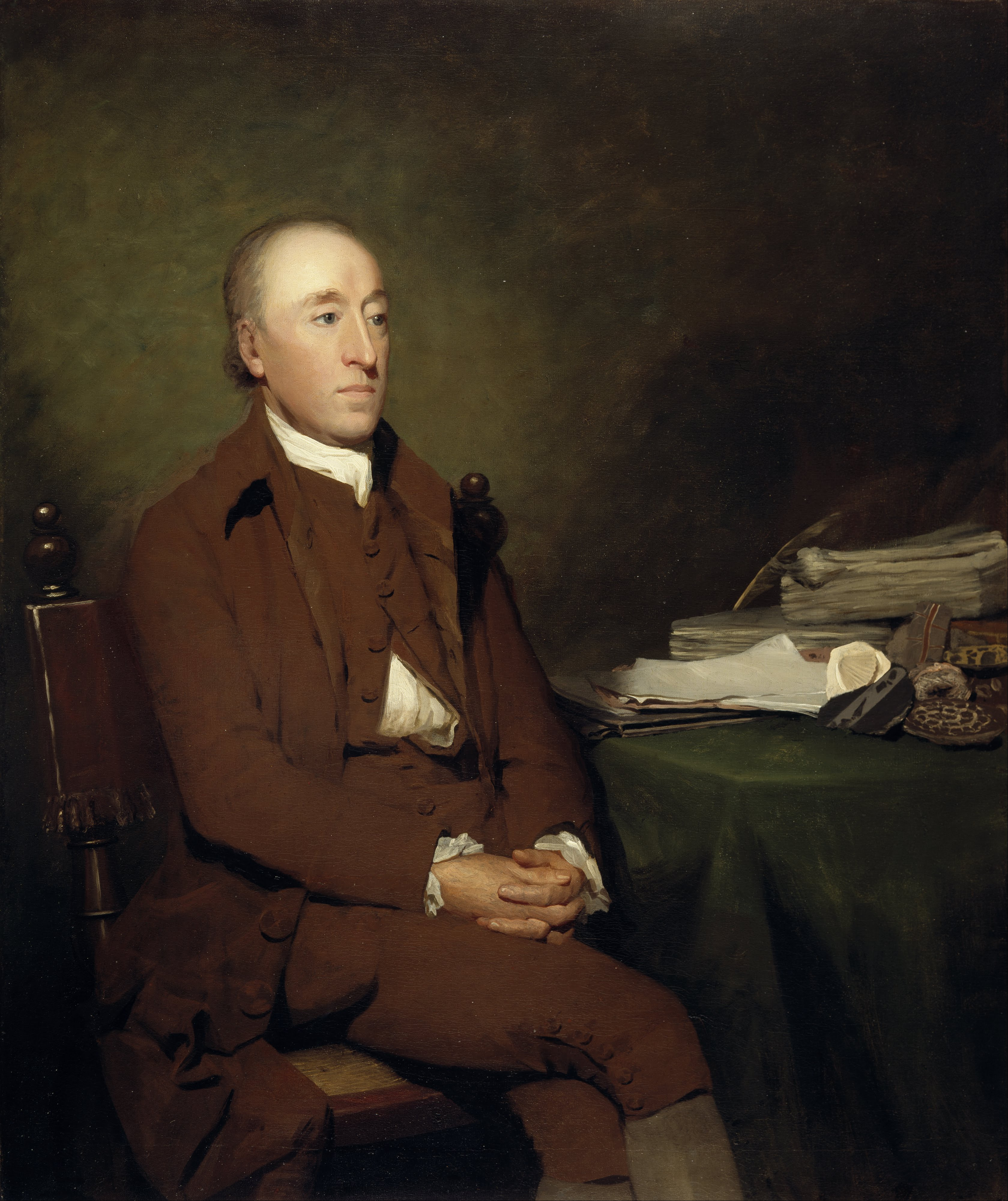
James Hutton (1785)
James Hutton was a geologist who studied Earth processes. He discovered that the Earth's surface was capable of twisting and wearing away. In addition, Hutton proposed that this change was slow and over long periods of time due to activity like volcanic eruptions and rain weathering. He was also the first to think of Deep Time or the concept that the Earth is so old that it is hard (impossible?) for a human to imagine. More on James Hutton, considered the Father of Modern Geology.


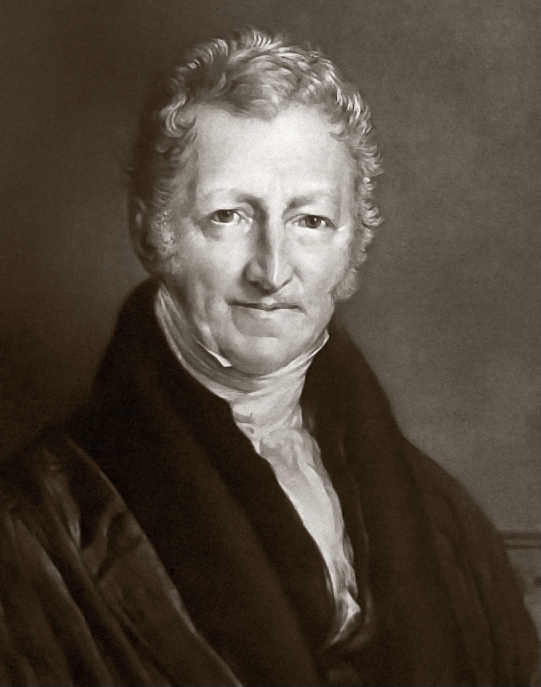
Thomas Malthus (1798)

Malthus was an economist that reasoned, if human population grew unchecked that there eventually wouldn't be enough resources to survive. Darwin used this concept heavily in his process of defining how populations might exist over time. More about Thomas Malthus.


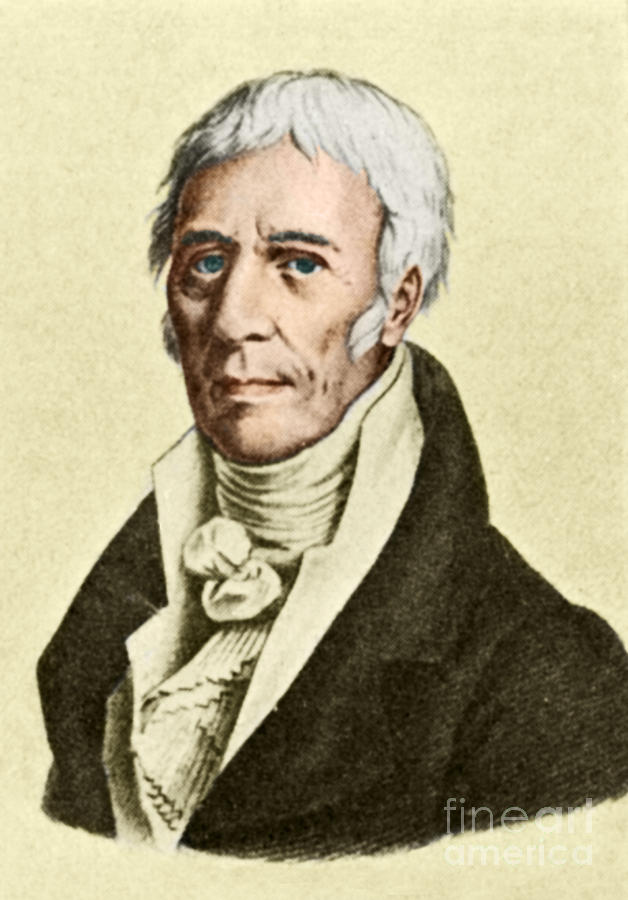
Jean-Baptiste Lamarck (1809)
Lamarck was a naturalist who believed that organisms could change during a lifetime by using or not using body parts. His paper on how individuals pass on traits to offspring and facilitating change over time was published the year Darwin was born. Lamarck also thought that organisms had an inborn drive to become more complex. More about Lamarck   and About the difference between Darwin and Lamarck's views on evolution.


Charles Lyell (1830-1833)
Lyell developed the concept of Uniformitarianism. This concept is that the laws of nature are constant over time. What this means is that those events we see now; volcanoes, rivers cutting valleys, erosion, etc must have been occurring in the past. Fun fact: Darwin read Lyell's "Principles of Geology" while on the HMS Beagle. About Charles Lyell and how he came to Uniformitarianism

Friday, March 28, 2014

#21 What is your opinion of cultivating hemp for products?

I am going to address this strictly as hemp used for making things like paper and building supplies and not addressing the medical uses of hemp.

First, we must discuss how hemp is identified. Most of these call for "industrialized hemp" production. So, we need to get to the bottom of what industrialized crops are.

Industrial farming also called intensive farming is a very damaging process. As defined, industrial crops mean the following:

*Monocropping - growing only one crop without rotation on large farms
*Intensive application of fertilizer - due to the overuse of the soil by the same plant type (even more of a concern since fast growing plants, like hemp, diminish soil nutrients faster than other plants)
*Use of pesticides (we'll discuss this in the text below)
*Reliance on Genetically Engineered Seeds
*Intensive irrigation
* Mechanized farming practices.
*** I suggest reading more here about how the above are defined and their impacts: About Industrialized crops


Lets tackle Genetic engineering first:
Hemp that is proposed to be grown for materials and foods, such as hemp seeds and oil, has been genetically modified to reduce the THC content to near zero and to provide better resistance to disease. In its natural state, the THC and other canaboids are what make the hemp plant resilient but this is not as true for the modified plant. There are also concerns about the pollen spreading and so many countries which grow hemp have distance requirements between farms Can Read more here about pollen spreading. Here you can read about the genetic modification of the Finola cultivar Fin-314 which is the most commonly grown variety.

Fertilizer requirements for hemp:
Because hemp is a fast growing plant it requires liberal use of fertilizers to reach maximum production. These fertilizers consist of mostly phosphates and potassium at rates similar to those required by industrialized wheat. The big concern is runoff and Eutrophication. This occurs regardless of how the fertilizer is sourced or produced. Eutrophication is an increase in dissolved nutrients in the water. This leads to algae blooms and eventual deoxygenation of the water system.

Water Requirements of Hemp:
Oregon University reported that hemp is very susceptible to drought or drought-like conditions and required irrigation.

Pesticide and Herbicide requirements:
While there are claims that hemp is resistant to disease and pests this is not true. It is tolerant which means the plant will not die but the damage can cause the product to be unuseable for production. Hemp seems to be particularly susceptible to fungus infections which occur even more often in damp or wet conditions. With the high requirement for water these fungus have been problematic in the EU and other areas where industrial hemp is grown for products. "estimates that 13 percent of fiber crops are lost to insects, 11 percent are lost to diseases, and 7 percent are lost to weeds and other organisms." (From the Oregon Research) Hemp production will require fungicides and insecticides to be grown as a large scale product.

Hemp is a carbon sink.
What does it mean to be a carbon sink?
This means that something is taking carbon out of the soil or atmosphere and storing, sequestering it. This is currently important because of climate change and Carbon emissions concerns. Carbon sinks can be short term or long term. For example, growing annual plants is a short term use of carbon. The plant grows removing carbon from the air. That plant is storing the carbon in its tissues but once the plant dies and decays that stored carbon is returned to the environment. Long term sinks include things like trees and other animal activities that hold the carbon for significant amounts of time. The ocean is also a carbon sink though too much carbon can change the water pH.

So is hemp a carbon sink? 
Only in the short term. If it is used as a biofuel it is only stored until that fuel is burned. If it is a food, it is only stored until you use the restroom and return that carbon to a state it will decay. The same is true for any other material. The hemp is only storing the carbon as long as the product is in use and not decaying.

Additional considerations....
We must have a place to grow this hemp which will mean clearing more land to be farmed.
Is this model better than the sustainable forest and logging practices already used?
Read the basics of sustainable foresting and logging here and Here
What is required to process hemp plants into useable products? Some processes include large amounts of water for soaking, bleaching and other preproduction processes. It is important to check out the full life cycle analysis for inputs and outputs through the process of producing hemp products. Some examples of these analyses are here and Here. There are many more of these assessments to be found.


So what do I think?
In theory, I have no issue with hemp as a plant to be grown however, the growing methods and the impacts those methods have on the environment are not acceptable in my personal opinion. Until better practices are put into place I cannot support the practice of growing hemp.


Read more here:
More about industrialized farming impacts
Comparative information about farming practices
Study on requirements for hemp production
Oregon State Report on requirements for Hemp Production
Reasearch into Phosphate Fertilizer application
Information on Eutrophication and other fertilizer impacts
Abough Sclerotinia Infection (a fungus that affects hemp and other plants)
List of pests and diseases that effects hemp.
Ontario Life Cycle Analysis and information

Monday, March 3, 2014

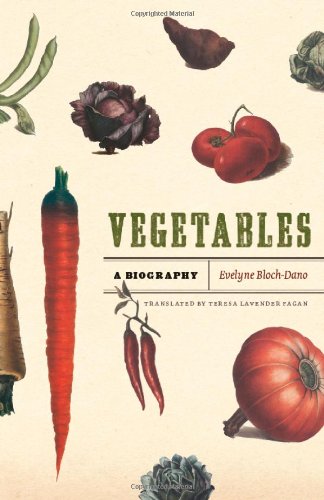
#20. Book Review: Vegetables: A Biography

I have had an influx of good ideas lately from those out there reading. Thank you. One of the ideas was book reviews. I am a voracious reader because of interest, class and work so I might as well share what I am reading.

Vegetables: A Biography

By Evelyne Bloch-Dano
Translated by Teresa Lavender Fagan
Narrated by Elizabeth Hanley

This book was originally written in French. I can't read French so I have read the English translation. There are some differences between the French and the English but not much.

What is this book about?
This book covers the history, linguistics, literature and cuisine around some of our common and forgotten vegetables.  The book contains a lot of history about how varied vegetables ended up in European, American and other cuisines. It is punctuated with pieces of literature, poetry, recipes and linguistic history... including the slang that derives from vegetables like "cabbage head". 

What I loved about this book.....
I normally listen to books as audiobooks. The one I listened to was read by Elizabeth Hanley. Her French accent, at least it sounds French to me, made the book experience better as it reminded me that this book was written from a Non-American perspective. I really like the way it was more world centric than American-centric like many of the food books I have read recently. I loved that all the subjects were blended flawlessly. Too often books break the science, history, literature and personal apart in a book. This book blended everything together into an easy to read and entertaining narrative.

What could have been better?
I wish it was longer. I wish this book went on about every fruit and vegetable in every cuisine. I really loved the author or translator's style.. I assume both working together.

On my own part I wish I knew French. Some of the phrases and poetry was read in French in the translation. I think it would have gotten a little more out of the book had I known French.